
Design in Ghana: The Future of Spaces, Style, and Sustainability
The design industry in Ghana is experiencing a thrilling transformation. It’s a mix of the old and the new, the traditional and the unconventional, the expected and the utterly surprising. Whether it’s the rise of sustainable packaging, the expansion of interior design, or the embrace of once-controversial home trends, one thing is clear—change is here, and it’s here to stay.
But, as with all change, there are moments of excitement, resistance, and a little bit of humor. Some trends make perfect sense (hello, sustainability), while others leave us scratching our heads (ornate wooden furniture making a comeback?). Regardless, one truth remains: the way we design, package, and decorate our spaces is no longer what it used to be.
Sustainable Packaging: The Green Shift
Ghana’s packaging industry is undergoing a much-needed transformation. With plastic waste piling up faster than we can clean it, businesses are being forced to rethink how they package their products. Enter: biodegradable materials, recyclable packaging, and minimalistic design.
According to Royal Crown Packaging, Ghanaian companies are realizing that consumers are demanding greener alternatives. The shift isn’t just about reducing waste; it’s about staying relevant and responsible.
But let’s be real—it’s not all smooth sailing. While big brands can afford to experiment with eco-friendly packaging, smaller businesses are struggling to keep up. Many still rely on cheap plastic bags, not because they want to, but because affordable sustainable options are hard to find. It’s a frustrating paradox: people want sustainability, but they also want affordability. Can we have both? Hopefully, the answer is yes, soon.
The Rise of Interior Design: More Than Just Decor
There was a time when interior design in Ghana was considered a luxury, something reserved for high-end homes and fancy offices. But not anymore. The demand for professional interior designers is skyrocketing, and between 2025 and 2031, the market is expected to grow significantly (6WResearch).
Why the sudden interest? People are realizing that well-designed spaces are not just about looking good—they improve well-being and productivity. Whether it’s a black tie event, a modern office, or even a church, design matters.
Yes, even churches are getting interior makeovers. With major events like Palm Sunday celebrations drawing large crowds, churches are investing in better aesthetics, better seating, and better overall ambiance. After all, a well-designed space can enhance the spiritual experience.
The Tech Boom in Construction and Design
Ghana’s construction and design industries are getting smarter—literally. Thanks to new software and AI-driven solutions, architects and designers can now create more precise, efficient, and sustainable structures. According to Statista, the design software market in Ghana is projected to grow by 1.43% annually between 2025 and 2029, reaching a market value of US$4.71 million.
This means fewer construction mistakes, better use of materials, and more visually stunning designs. But here’s the catch—while big firms are thriving in the digital shift, many small-scale builders still rely on traditional methods. The challenge? Making these tools more accessible to everyone in the industry.
Web Design Trends: A Much-Needed Upgrade
For the longest time, many businesses in Ghana thought a Facebook page was enough. Who needs a website when you can just post your products on social media, right? Well, that logic is starting to fade, and modern web design trends are taking over.
Minimalism, faster-loading pages, and mobile-first designs are now a must. According to Doctor Barns, a Ghanaian web expert, businesses that don’t invest in proper websites are falling behind. But let’s not ignore the hilarious reality—some businesses are still running websites that haven’t been updated since 2010. You know the ones:
- Broken contact forms
- Grainy, outdated images
- A ‘Coming Soon’ page that’s been there for five years
The good news? More businesses are waking up. The bad news? Some still refuse to change. But hey, at least now, when you search for birthday flyer design or church poster design, you’ll actually find websites that don’t look like they were built on Windows 98.
The Return of “Controversial” Home Trends
Some home trends never die—they just wait for the right time to confuse us all over again. Designers are now embracing styles that were once considered outdated or controversial (RealSimple). Think:
- Wall tapestries (because your home needs a medieval castle vibe, apparently)
- Ornate wooden furniture (grandma’s living room is making a comeback!)
- Accent walls (because one color just isn’t enough anymore)
It’s a bold shift, and the message is clear: Your home should reflect your personality, even if that personality is a bit… eclectic.
The best part? People are loving it. Homeowners are being encouraged to embrace their own tastes instead of blindly following trends. So if you want a bright red accent wall with gold curtains and a leopard-print rug—who’s stopping you?
Dramatic Draping: The Wedding Trend No One Saw Coming
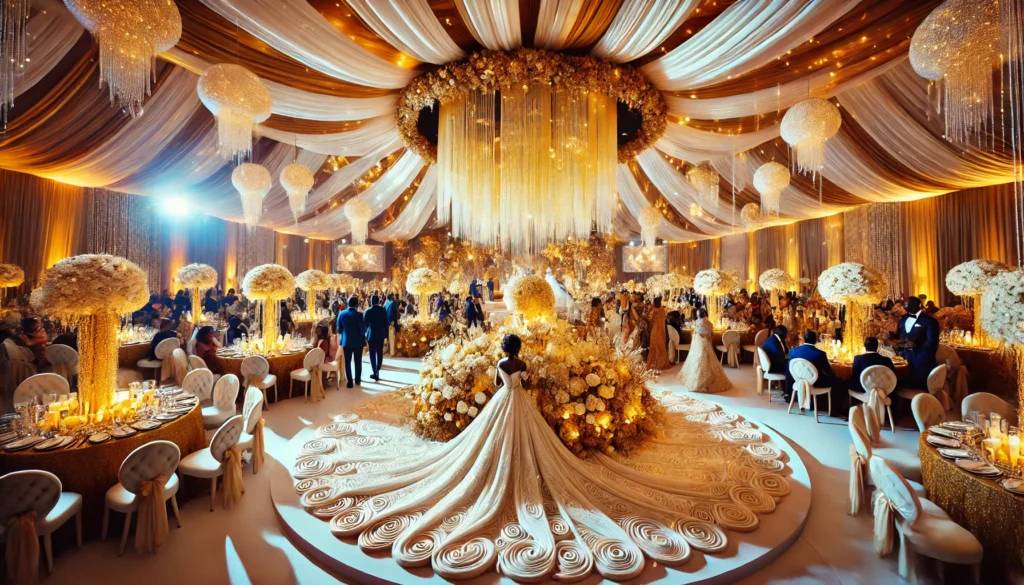
Forget simple wedding decorations—dramatic draping is now the go-to trend for Ghanaian weddings (Brides.com). Imagine:
- Flowing white fabrics cascading from the ceiling
- Rich textures and artistic installations
- Venues completely transformed into fairy-tale settings
This trend isn’t just for show—it creates an entirely new atmosphere. The elegance, the softness, the way the fabric moves—it all adds to the romance of the event. And let’s be real: Ghanaian weddings are already grand affairs. If we can have a 50-person bridal party and a 6-hour reception, why not throw in dramatic draping for that extra magic?
Final Thoughts: Where Do We Go from Here?
Ghana’s design industry is changing fast, and whether you’re in packaging, interior design, construction, or events, adaptation is key.
Some trends, like sustainable packaging and digital construction tools, are necessary shifts toward the future. Others, like controversial home décor and dramatic wedding draping, remind us that design should be personal, bold, and sometimes even a little over-the-top.
As we move forward, one thing is certain: Ghana is becoming a leader in design innovation, blending tradition with modernity in ways that are both unexpected and exciting. Whether it’s a Palm Sunday church design, a black tie event, or a website upgrade, design is no longer just about aesthetics—it’s about functionality, identity, and impact.
And if we can embrace gold-trimmed furniture and leopard-print rugs along the way? Well, why not?he design industry in Ghana is experiencing a thrilling transformation. It’s a mix of the old and the new, the traditional and the unconventional, the expected and the utterly surprising. Whether it’s the rise of sustainable packaging, the expansion of interior design, or the embrace of once-controversial home trends, one thing is clear—change is here, and it’s here to stay.
But, as with all change, there are moments of excitement, resistance, and a little bit of humor. Some trends make perfect sense (hello, sustainability), while others leave us scratching our heads (ornate wooden furniture making a comeback?). Regardless, one truth remains: the way we design, package, and decorate our spaces is no longer what it used to be.
Sustainable Packaging: The Green Shift
Ghana’s packaging industry is undergoing a much-needed transformation. With plastic waste piling up faster than we can clean it, businesses are being forced to rethink how they package their products. Enter: biodegradable materials, recyclable packaging, and minimalistic design.
According to Royal Crown Packaging, Ghanaian companies are realizing that consumers are demanding greener alternatives. The shift isn’t just about reducing waste; it’s about staying relevant and responsible.
But let’s be real—it’s not all smooth sailing. While big brands can afford to experiment with eco-friendly packaging, smaller businesses are struggling to keep up. Many still rely on cheap plastic bags, not because they want to, but because affordable sustainable options are hard to find. It’s a frustrating paradox: people want sustainability, but they also want affordability. Can we have both? Hopefully, the answer is yes, soon.
The Rise of Interior Design: More Than Just Decor
There was a time when interior design in Ghana was considered a luxury, something reserved for high-end homes and fancy offices. But not anymore. The demand for professional interior designers is skyrocketing, and between 2025 and 2031, the market is expected to grow significantly (6WResearch).
Why the sudden interest? People are realizing that well-designed spaces are not just about looking good—they improve well-being and productivity. Whether it’s a black tie event, a modern office, or even a church, design matters.
Yes, even churches are getting interior makeovers. With major events like Palm Sunday celebrations drawing large crowds, churches are investing in better aesthetics, better seating, and better overall ambiance. After all, a well-designed space can enhance the spiritual experience.
The Tech Boom in Construction and Design
Ghana’s construction and design industries are getting smarter—literally. Thanks to new software and AI-driven solutions, architects and designers can now create more precise, efficient, and sustainable structures. According to Statista, the design software market in Ghana is projected to grow by 1.43% annually between 2025 and 2029, reaching a market value of US$4.71 million.
This means fewer construction mistakes, better use of materials, and more visually stunning designs. But here’s the catch—while big firms are thriving in the digital shift, many small-scale builders still rely on traditional methods. The challenge? Making these tools more accessible to everyone in the industry.
Web Design Trends: A Much-Needed Upgrade
For the longest time, many businesses in Ghana thought a Facebook page was enough. Who needs a website when you can just post your products on social media, right? Well, that logic is starting to fade, and modern web design trends are taking over.
Minimalism, faster-loading pages, and mobile-first designs are now a must. According to Doctor Barns, a Ghanaian web expert, businesses that don’t invest in proper websites are falling behind. But let’s not ignore the hilarious reality—some businesses are still running websites that haven’t been updated since 2010. You know the ones:
- Broken contact forms
- Grainy, outdated images
- A ‘Coming Soon’ page that’s been there for five years
The good news? More businesses are waking up. The bad news? Some still refuse to change. But hey, at least now, when you search for birthday flyer design or church poster design, you’ll actually find websites that don’t look like they were built on Windows 98.
The Return of “Controversial” Home Trends
Some home trends never die—they just wait for the right time to confuse us all over again. Designers are now embracing styles that were once considered outdated or controversial (RealSimple). Think:
- Wall tapestries (because your home needs a medieval castle vibe, apparently)
- Ornate wooden furniture (grandma’s living room is making a comeback!)
- Accent walls (because one color just isn’t enough anymore)
It’s a bold shift, and the message is clear: Your home should reflect your personality, even if that personality is a bit… eclectic.
The best part? People are loving it. Homeowners are being encouraged to embrace their own tastes instead of blindly following trends. So if you want a bright red accent wall with gold curtains and a leopard-print rug—who’s stopping you?
Dramatic Draping: The Wedding Trend No One Saw Coming
Forget simple wedding decorations—dramatic draping is now the go-to trend for Ghanaian weddings (Brides.com). Imagine:
- Flowing white fabrics cascading from the ceiling
- Rich textures and artistic installations
- Venues completely transformed into fairy-tale settings
This trend isn’t just for show—it creates an entirely new atmosphere. The elegance, the softness, the way the fabric moves—it all adds to the romance of the event. And let’s be real: Ghanaian weddings are already grand affairs. If we can have a 50-person bridal party and a 6-hour reception, why not throw in dramatic draping for that extra magic?
Final Thoughts: Where Do We Go from Here?
Ghana’s design industry is changing fast, and whether you’re in packaging, interior design, construction, or events, adaptation is key.
Some trends, like sustainable packaging and digital construction tools, are necessary shifts toward the future. Others, like controversial home décor and dramatic wedding draping, remind us that design should be personal, bold, and sometimes even a little over-the-top.
As we move forward, one thing is certain: Ghana is becoming a leader in design innovation, blending tradition with modernity in ways that are both unexpected and exciting. Whether it’s a Palm Sunday church design, a black tie event, or a website upgrade, design is no longer just about aesthetics—it’s about functionality, identity, and impact.
And if we can embrace gold-trimmed furniture and leopard-print rugs along the way? Well, why not?